The impact of generalist CEOs on workplace safety

A publication titled “The impact of generalist CEOs on workplace safety” on Journal of Behavioral and Experimental Finance by Sasha Molchanov, Harvey Nguyen and co-authors in June 2025

Abstract

Businesses are expected to operate as responsible corporate entities, with employee safety serving as a cornerstone of this responsibility. Executives, as corporate leaders, bear moral and ethical obligations to ensure the well-being of their workforce. Drawing on human capital and upper echelons theories, we examine the influence of executives’ transferable skills on workplace safety outcomes. We find that chief executive officers (CEOs) with general managerial human capital significantly contribute to the creation of safer work environments. The relation is more pronounced in firms facing financing constraints or intense market competition. These CEOs improve safety outcomes by making more prudent labor investment decisions, reducing employee workloads, and maintaining high information quality. Overall, our study underscores the pivotal role of CEOs’ general managerial human capital in promoting employee well-being and mitigating the potential adverse consequences of occupational hazards on firm performance.
Air pollution and corporate innovation investment

A publication titled “Adjusted air pollution exposure and corporate innovation investment: Evidence from China” on International Review of Finance by Jing Chi and co-authors in June 2025

Abstract

Using a novel measure of air pollution exposure adjusted for the heterogeneity of exposures and the extent of local air pollution, we find a significant negative relationship between adjusted air pollution exposure and corporate innovation investment. This finding still holds after controlling for endogeneity and conducting a series of robustness tests. While the relationship is mediated through net operating cash flows and debt financing costs, we also find that firms with high adjusted air pollution exposure might have deteriorated productivity of R&D personnel, which ultimately hinders innovation input and output. However, state ownership appears to mitigate this adverse effect of adjusted air pollution exposure. Furthermore, the adverse effects of air pollution exposure on innovation investment are more pronounced among firms that disclose environmental information, exhibit low managerial risk tolerance, operate in non-polluting industries, or are located in developed and less polluted regions. Additionally, the negative impact is particularly evident in the subsample of firms after the signing of the 2015 Paris Agreement. This study sheds light on the importance of adjusted air pollution exposure and its influence on corporate investment in China.

Digital Finance and Birth Rates

A publication titled “How does digital finance impact birth rates: Evidence from China” on Economic Analysis and Policy by Jing Chi and co-authors in June 2025

Abstract

Digital finance (DF), the integration of tradition financial services and new information technology, has been shown to have various impacts in social behaviour. However, how DF affects people’s fertility behaviour is still under investigation and worth exploring from the point of view of long-term economic growth. By employing a DF index, publicly available city-level birth rates in 287 Chinese cities, we find DF has a negative influence on birth rates. This finding is supported by endogeneity and several robustness tests. Mechanism tests show DF increases investment opportunities and therefore reduces the need of having children for support in old age. DF increases consumption and possibly individualism and also increases women’s economic independence and their opportunity cost of having children, leading to lower birth rates. Given the development of DF is an inevitable trend, we further find that out of the three components of DF index measures, the coverage of DF significantly decreases birth rates, while the higher level of DF development, depth and digitalization, have much less negative impact on birth rates. Finally, this negative impact can be moderated when governments make policy efforts to increase educational and medical resources and provide protection of religion. This paper provides a novel perspective on the influence of DF on social behaviour through DF’s direct impact on investments, consumption and income.

Board gender diversity and firm performance

A publication titled “Board gender diversity and firm performance revisited: international evidence” on Applied Economics by George Wu and co-authors in April 2025

Abstract

We examine the relationship between board gender diversity and firm performance across 40 countries in the period 2009–2018. Using an instrumental variable approach, we show that the presence of female directors negatively affects firm performance. We further explore how country- and firm-level institutions reshape this negative relationship. We find that the negative effect of female directors on firm performance is alleviated in countries with a higher score for control of corruption, government effectiveness, rule of law and regulatory quality. At the firm-level, the negative relationship between board gender diversity and firm performance is mitigated in firms with more anti-takeover devices and a board gender diversity policy, but is strengthened when the CEO also holds the title of the chair of the board. Overall, we agree with previous literature that proposals for regulations enforcing gender quotas on boards must be motivated by reasons other than improvements in firm performance.

Do financial markets value corporate culture?

A publication titled “Do financial markets value corporate culture?” on International Review of Financial Analysis by Harvey Nguyen and co-authors in February 2025

Abstract

This paper examines how financial market participants incorporate corporate culture, an important value-relevant information, into their investment decisions. Utilizing firm-level corporate culture measures derived from the earnings conference call transcripts, we find that firms with stronger cultural values are associated with higher stock liquidity. We identify three channels through which corporate culture affects stock liquidity: reducing information risk, enhancing trust, and increasing investor recognition. In addition, we find that stronger corporate culture is significantly associated with higher stock price informativeness and future stock returns, and lower level of default risk and informed trading. Overall, our findings highlight the importance of corporate culture in enhancing financial market quality.

Work from Home and Credit Risk Assessment

A publication titled “Work from Home Suitability and Credit Risk Assessment” on European Accounting Review by Harvey Nguyen and co-authors in Januray 2025

Abstract

Employing firm-level work from home (WFH) suitability derived from the U.S. universe job postings, we investigate whether rating agencies and debt holders incorporate WFH suitability in their risk assessments. We document that firms with higher WFH suitability have higher credit ratings and lower costs of debt. Our results are robust to different fixed effect estimations, sampling methods, and controls. We identify two ways that WFH suitability translates into higher credit ratings: high WFH suitability is associated with lower future cash flow volatility and lower default risk. Overall, our study suggests that WFH suitability is an important determinant of credit risk assessments and that firms should see flexible work arrangements as an effective strategy in their crisis management planning.

Connectedness between DeFi and Islamic Assets

A publication titled “Tail risk connectedness between DeFi and Islamic assets and their determinants” on International Review of Economics & Finance by Hung Do and co-authors in January 2025

Abstract

This study explores tail risk spillover between DeFi and Islamic assets using a time-frequency domain approach. We also conduct sub-sample analyses to account for the diverse impacts of COVID-19 and the Russian-Ukrainian conflict on financial markets. Recognizing the importance of global factors in financial market interdependencies, this research also assesses their impacts on tail risk connections. Empirical findings reveal varying levels of total connectedness among DeFi assets, sukuk markets, and Islamic equity indexes across different time spans, indicating a moderate but fluctuating degree of integration. DeFi assets generally appear disconnected from sukuk and Islamic stock markets over various periods, with the notable exception of a strong and consistent link between SNX in the DeFi sector and sukuk markets (excluding the Indonesian market) over medium- and long-term durations, suggesting that both DeFi and Islamic assets have hedging capabilities. Additionally, the integration between DeFi and Islamic assets is weaker during the COVID-19 era compared to the Russian-Ukrainian conflict period, with changes in the transmission mechanism. Further analysis identifies several potential predictors of tail risk connectedness between DeFi and Islamic assets. Our findings have significant risk management implications for investors and DeFi companies.

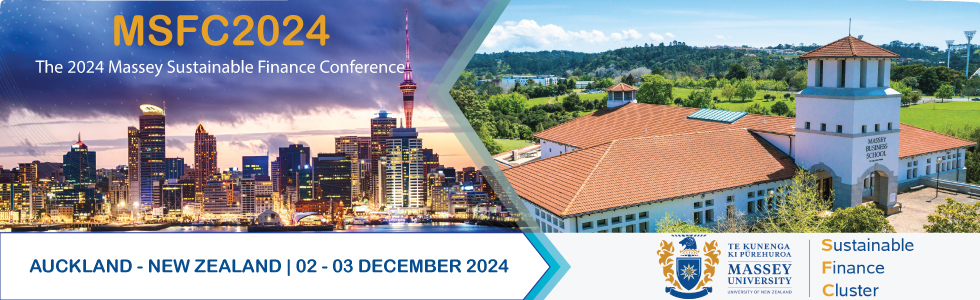
Massey Sustainable Finance Conference 2024

02 – 03 December 2024 | Auckland, New Zealand

The conference cordially invites scholars to submit research papers for presentation consideration at the 2024 Massey Sustainable Finance Conference that will take place on 02-03 December 2024 in Auckland, New Zealand. The conference allows both online and in-person presentations.

This conference, organized by the Massey Sustainable Finance Cluster at School of Economics and FinanceMassey University, aims to bring together academics, practitioners, and policymakers sharing their research findings and discussing current and challenging issues in the crossroad of Finance and Sustainability. The conference is also an ideal occasion for all scholars around the world to present their research, exchange research ideas and experiences, and develop research projects.

The scientific and organizing committees welcome submissions in all topics that link Finance and Sustainability together for presentation at the conference no later than 30th August 2024 (early submission is highly encouraged).

Macroeconomic Implications of Transitions to Low-Carbon Energy in Vietnam

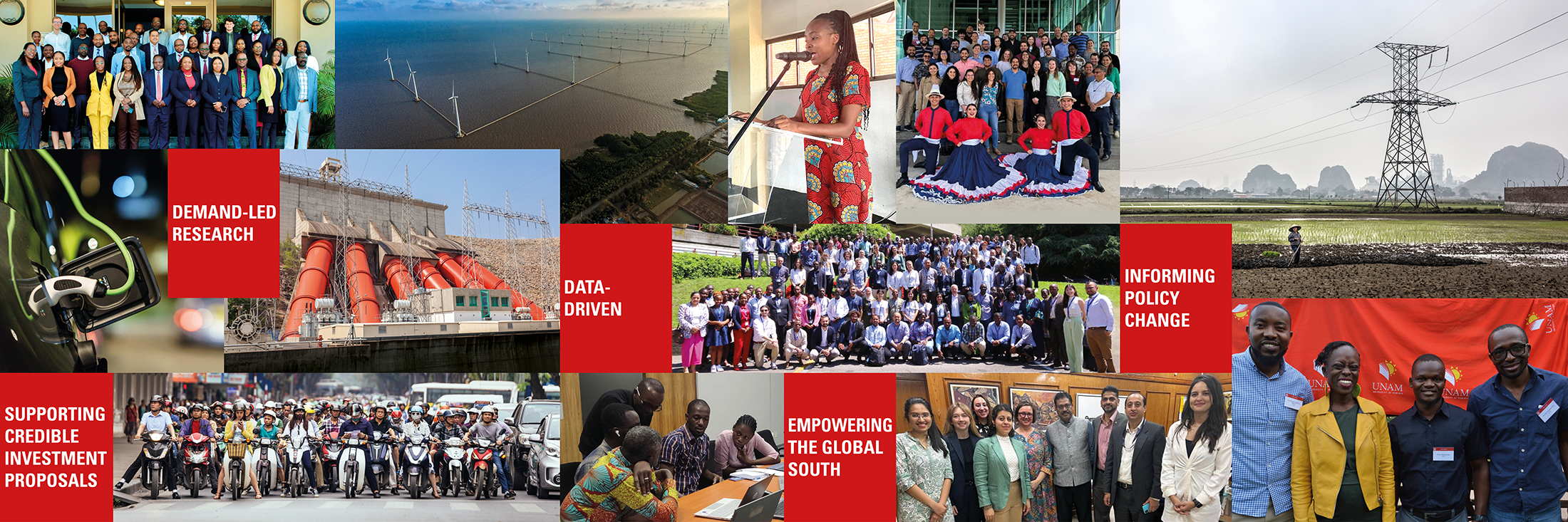
Dr. Hung Do (Sustainable Finance Cluster, Massey University) had led a team comprising colleagues from France, the US, the UK, New Zealand, and Vietnam to successfully secure a GBP90,000 funding support for a 15-month research project on “Macroeconomic Implications of Transitions to Low-Carbon Energy in Vietnam”. The funding is supported by the Climate Compatible Growth (https://climatecompatiblegrowth.com/).

Aims

This project aims to offer evidence-based insights into the impact of the energy transition on macroeconomic aspects in Vietnam, with a particular emphasis on the economic consequences of carbon prices.

Team

  • Hung Do (Lead) – Massey University, New Zealand & AVSE Global
  • Thuy Dao – IPAG Business School, France & AVSE Global
  • An Thi Thuy Duong – Ho Chi Minh University of Banking, Vietnam & AVSE
    Global
  • Oanh Kieu Ha – National Economics University, Vietnam & AVSE Global
  • Hai Trung Le – Banking Academy of Vietnam & AVSE Global
  • Vu Trinh – Newcastle University, United Kingdom & AVSE Global
  • Linh Pham – Lake Forest College, United States & AVSE Global
  • Khanh Hoang – Lincoln University, New Zealand & AVSE Global
  • Tam Nguyen – Nottingham Trent University, United Kingdom & AVSE Global
  • Thao Nguyen – Nottingham Trent University, United Kingdom & AVSE Global

Vietnam Symposium in Climate Transition 2023

14 -15 December 2023 | Da Nang, Vietnam

Climate change is a global threat requiring the cooperation of all stakeholders, including governments, corporations, and civil society, to mitigate its harmful impacts and to ensure a just climate transition to a low-carbon, more resource-efficient, and sustainable economy. Under the Paris Agreement and the 2030 UN Sustainable Development Goals (SDGs), countries are expected to mobilize all possible efforts and resources (human, financial, and capital) to achieve targeted climate and energy goals.

Jointly co-organized by the Association of Vietnamese Scientists and Experts (AVSE Global), the University of Danang – University of Economics, and Massey University, the 2023 Vietnam Symposium in Climate Transition (VSCT-2023, IN-PERSON and ONLINE) aims to provide a leading forum for academics, practitioners, and policymakers to present their research findings and discuss current and challenging issues in climate transition, environment, and energy change mitigation and adaptation. The Symposium is also ideal for Vietnamese scholars to exchange research experiences and develop research projects with their international colleagues.